
Prepare the campaign in one place.
Keep delivery under control.
Pika Campaign Manager brings the audience, communication content, Email, SMS or WhatsApp channel, timing and pre-send controls together within one campaign context.
The objective is not simply to send a message. It is to manage who should receive it, which content should be used, which channel should carry it and which control steps should happen before delivery.
What is Campaign Manager?
Campaign Manager is Pika's campaign-orchestration layer that brings campaign content, communication channel, timing and controlled delivery together for a defined audience.
Audience Manager answers “WHO?”
Content Studio supports preparation of communication content.
Campaign Manager brings those pieces together at campaign level and focuses on:
Campaign Manager is not the layer that calculates customer intelligence, it is not Audience Manager, and it is not Journey Manager for multi-step customer flows.
The product role of Campaign Manager is to turn an approved campaign decision into a controlled delivery process.
A campaign is more than the “send message” step.
Behind a campaign are multiple decisions: audience, content, channel, timing, permission context and delivery control.
When those decisions are managed across disconnected tools, campaign operations can turn into moving lists, matching content manually and following separate channel processes.
Different campaigns reaching the same customer at the same time or under inappropriate conditions also becomes an operational risk that must be managed when campaign decisions are handled independently.
This allows campaign operations from audience selection through delivery planning to be managed within one campaign context.
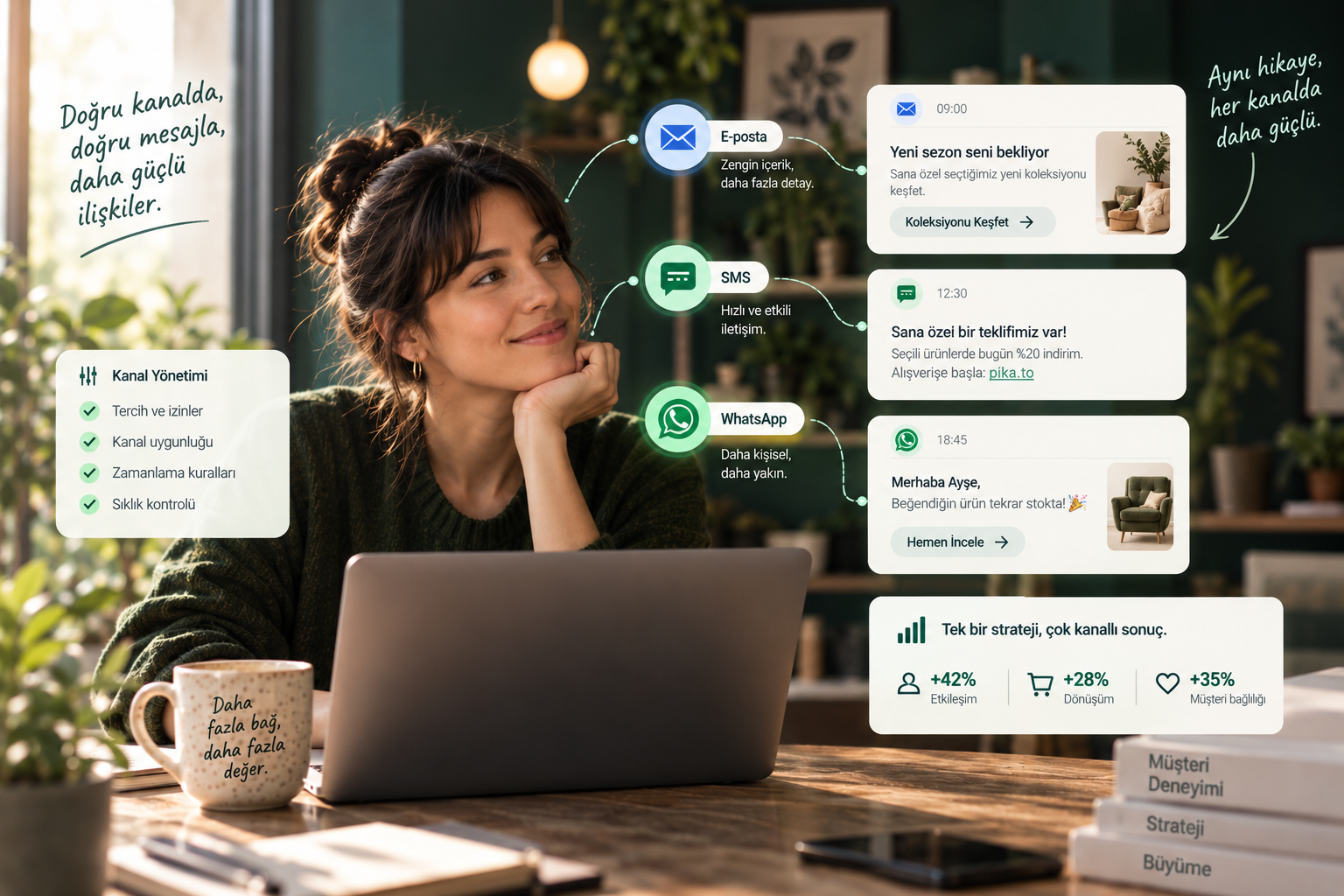
Define the campaign before the send button.
Campaign Manager brings the core decision components required to execute a campaign into the same context.
Audience
The customer group defined in Audience Manager or selected for the campaign provides the “WHO?” context.
Content
Communication content and the relevant template define what will be communicated to the customer.
Channel
A confirmed communication channel is selected from Email, SMS or WhatsApp for the campaign.
Timing
When the campaign should enter the delivery process is part of the campaign plan.
Pre-Send Controls
Permission, reachability and relevant delivery-safety controls are evaluated before campaign execution.
Measurement
Delivery and engagement results, together with commercial outcomes that can be associated with the campaign, can later be evaluated in the measurement layer.
Audience Manager defines the audience. Campaign Manager executes the campaign.
Audience Manager and Campaign Manager do not perform the same product role. Audience Manager defines through customer attributes and behavioral context which customers belong in the audience for a particular decision.
Campaign Manager brings the selected audience together with campaign content, channel, timing and delivery controls.
An audience definition is not the campaign itself. Campaign Manager is the next layer that connects the “WHO?” decision to campaign operations.
Preparing content and executing the campaign are different jobs.
Content Studio supports preparation of communication content and templates used in campaigns.
Campaign Manager uses selected content together with audience, channel and campaign timing within the same operational context.
This distinction keeps content creation and delivery orchestration from being treated as the same product responsibility.
Manage Email, SMS and WhatsApp campaigns within the same decision framework.
Campaign Manager's confirmed and publicly marketed campaign channels are Email, SMS and WhatsApp.
A channel for richer content, visual templates and detailed campaign communication.
Explore Email →A messaging channel for customer communication through approved WhatsApp templates.
Explore WhatsApp →Channel selection does not replace the question of why the campaign exists. Audience and campaign context come first; the channel is one of the execution paths for that decision.
Being in the audience is not the same as being eligible for delivery.
A customer belonging in a campaign audience does not by itself mean that commercial communication can be sent through the selected channel.
Within Pika's controlled delivery process, available consent, opt-out, channel reachability and relevant delivery-eligibility controls are evaluated before execution.
IYS and other permission context form part of this delivery-safety chain where applicable.
manages the campaign and controlled delivery plan.
evaluate whether communication can be executed within the relevant control context.
The objective is not to guarantee a legal outcome. It is to include permission and delivery controls in campaign execution.
Do not manage campaigns only through “send now.”
Campaign Manager helps schedule a campaign to enter the delivery process at a future time.
To keep delivery load controlled, campaign execution can progress within defined pacing or delivery-rate management.
For larger audiences, this provides a manageable operational process rather than releasing an unlimited delivery load at once.
These controls do not change the marketing decision. They manage controlled execution of the campaign after that decision has been made.
Campaign Manager does not find the opportunity. It is the controlled execution layer that turns a decision into a campaign.
Daily Opportunities makes evaluable commercial opportunities such as repeat purchase, cross-sell and win-back visible.
Once a decision is made to evaluate that opportunity, Audience Manager helps define the appropriate audience.
Campaign Manager connects the selected audience to content, channel, timing and delivery controls within a campaign operation.
A campaign does not end when the send button is pressed.
Within Campaign Manager context, delivery and engagement results can later be used when evaluating campaign performance.
Delivery, engagement and sales or revenue outcomes that can be associated with the campaign can be considered together in the measurement layer.
Here, “revenue attribution” means associating a commercial outcome with a campaign within defined attribution rules.
helps establish an association.
The objective is not only to count messages sent, but to evaluate outcomes that can be associated with the campaign within the same measurement context.
Put Campaign Manager in the right place.
Campaign Manager is not Audience Manager.
Audience Manager defines the audience. Campaign Manager connects that defined audience to campaign and controlled-delivery operations.
Campaign Manager is not Content Studio.
Content Studio supports preparation of communication content and templates. Campaign Manager uses selected content in campaign operations.
Campaign Manager is not Journey Manager.
Campaign Manager manages a defined campaign and controlled send. Journey Manager manages multi-step sequence, conditions, waits and customer-journey logic.
Campaign Manager is not Consent Management.
Campaign Manager connects relevant controls to the delivery process. Permission, preference and consent governance are managed through separate product and control contexts.
Campaign Manager is not a bulk-message sender.
Pika's campaign approach is not based on taking a contact list and sending as many messages as possible. Audience, content, channel, timing and control context are part of the campaign.
Campaign Manager is not an autonomous AI delivery engine.
Pika Pilot can help accelerate campaign preparation, but Campaign Manager is not positioned as a self-starting AI system that removes user control.
Campaign Manager does not guarantee sales or revenue.
Campaign outcomes can be measured and associated with commercial outcomes, but a particular sales, conversion or revenue result is not guaranteed.
Campaign Manager's publicly confirmed channels are Email, SMS and WhatsApp.
The confirmed active communication channels in C07 are Email, SMS and WhatsApp.
Frequently Asked Questions
What is Campaign Manager?
Which communication channels does Campaign Manager support?
What is the difference between Campaign Manager and Audience Manager?
What is the difference between Campaign Manager and Journey Manager?
Does Campaign Manager include pre-send consent controls?
Can Campaign Manager schedule campaigns?
Can Campaign Manager measure campaign revenue?
Does Campaign Manager automatically send campaigns with AI?
Define the audience.
Choose the content.
Keep delivery under control.
Let's explore how Pika Campaign Manager brings audience, content, Email, SMS and WhatsApp channel selection, timing and pre-send controls together within one campaign context.
Pricing is tailored to your requirements and scope of use.